For a long time I wanted to introduce myself and my family with pictures. Not just any pictures, but those taken with the Nikon V1, 1 Nikkor 18.5mm f/1.8, 50m f/1.4 C-Mount and 25mm f/1.4 C-Mount. Let’s begin with me, the admin of this blog. My name is Ivan.
Category: Nikon V1
It’s been more than a month since the last time I’ve posted some photos taken with the cheap 25mm f/1.4 C-Mount lens on the V1. I was quite busy shooting with the 18.5mm f/1.8 (my review) and reporting on all the new 1” releases, like the Nikon V3 and Samsung NX mini. But finally here are half a dozen photos I’ve shot since last time. I hope you like them. 🙂
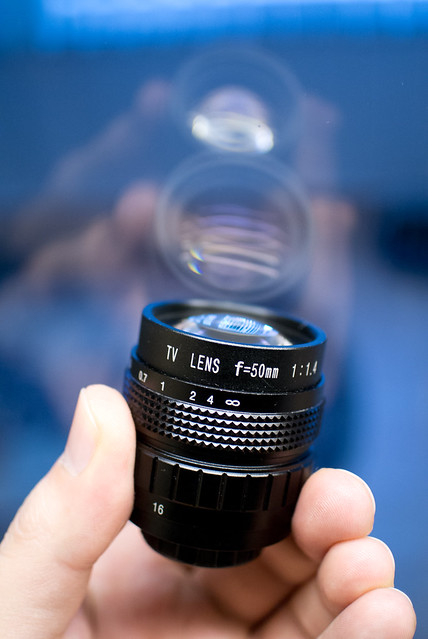
More than a month ago I have posted some of my images taken with the 50mm f/1.4 C-Mount and my initial thoughts regarding the no-name lens. In the meantime I have taken some additional photos with the “Plastilux” (which is what I like to call it) and my Nikon V1, but not nearly as many as I would have liked to. Nevertheless I feel confident that I have learned all there is to know about the 50/1.4 C-Mount since I’ve bought it in August 2013.
(UPDATE 02.06.2016: I’ve been using the 50/1.4 CCTV C-mount lens on my Olympus OM-D E-M10 and have written a micro 4/3 centric review. If you are a M4/3 shooter and would like to see how this lens performs on the larger sensor, you can read the review here.)
So why call it “Plastilux”? Well, at $47/£32/€38 this lens is cheap but capable of some great results, if you put in the time. Read on to find out what I think about the build quality, image quality, depth of field control, usability and price vs. performance of this lens.
Folks who visit my blog on a regular basis know that I like to shoot dogs, cats, macro and portraits. This time around I’m posting some of my latest dog photos taken with the Nikon V1, 18.5mm f/1.8 and “Plastilux” 50mm f/1.4 C-Mount lens. Let’s begin with the shots taken with the 18.5mm f/1.8.
I’ve had the cheap, plastic C-Mount 50mm f/1.4 lens for almost three months now, but have only been using it extensively for the last couple of weeks. This is not enough time to form an opinion on any piece of equipment. For now I can only say that the lens is inexpensive, cheaply made, that for some reason it doesn’t focus beyond 2-3 meters and that it isn’t as sharp as native Nikon 1 lenses. Comparing the 50mm f/1.4 C-Mount lens to my Nikkor 18.5mm f/1.8 would be the same as comparing a Tata car to a Porsche. But, the 50mm F/1.4 “Plastilux” (which is what I like to call it), has one major advantage over the fast standard prime from Nikon: Bokeh!
More than two years after release Nikon still doesn’t offer a native macro lens for its Nikon 1 system. This means that if you intend to take macros, you are left with a few “odd” choices. The most powerful, but also the most expensive and bulky solution is to buy the FT-1 adapter and a DX or FX Micro-Nikkor, like the 40mm f/2.8, 60mm f/2.8G ED, 85mm f/3.5 IF-ED or 105mm f/2.8 IF-ED. These lenses will allow you to achieve even greater image ratios (above 1:1) on N1 cameras than when used on DX or FX Nikon DSLRs. Including the FT-1 adapter these setups will cost you from $530 up to $1000. The other two solutions are intelligent extension tubes for existing Nikon 1 lenses (you can’t buy a “dumb” tube, because AF will not work, and “by wire” MF and aperture control on N1 lenses need power from the camera) or achromatic and close-up lenses. Both are considerably cheaper, but also less powerful. BUT, depending on your expectations, cheap solutions such as extension tubes and achromatic lenses could be just the right thing for you. One of my main reasons for investing in Nikon 1 was low size and weight, which was the reason I wasn’t ready to add so much weight and bulk to my photo bag with the FT-1 and a full grown Nikkor. I ended up buying the Marumi DHG200 +5 achromatic lens with a 52mm filter thread and a 40.5mm to 52mm step-up ring instead, which turned out to be perfect for my needs. At least until Nikon releases a native Micro-Nikkor for Nikon 1, in which case I will get that lens and use it WITH the Marumi. Here is what the Marumi looks like mounted on the Nikon V1 and 10-30mm.
All of these were taken with my Nikon V1 and Nikon 18.5mm f/1.8 at wide open aperture.

Shortly after I bought my Nikon V1 with the 10-30mm f/3.5-5.6 last November, I decided to get a nice, small bag for my Nikon 1 kit. My previous “bag” of choice was a worn out Nike sports rucksack, which I used to carry around my old, analogue Nikon SLRs, Contax G1 and Bronica ETRS. The rucksack was way oversized for a small N1 kit. Since I wanted a small bag, large enough to carry around a medium-sized kit (at that time I only had the V1 and 10-30mm, but was planning to expand my lens collection), I made a decision to get Lowepro Rezo 110 AW.
For a long time I was considering to write a review of the Nikon 18.5mm f/1.8 lens, but wasn’t able to find the time. Busy work schedule and taking photos with the lens, instead of writing about it, kept me from doing it. But now, after more than 8 months of use, I’ve finally managed to sit down and put my thoughts on paper.
What is it about this lens that makes it so special in the Nikon 1 realm? It is a relatively fast standard prime, which comes at a reasonable price point. At the time of writing the price in EU is around €180. I’ve paid €200 in February 2013 and found the price more than justified considering the very fast autofocus action, the very good optical performance at wide open apertures and some unique features of the N1 cameras which increase the usability of this lens greatly in comparison to any other standard prime. I will go into more detail on that later, the point that I’m trying to make is that people who compare the 18.5/1.8 to a much larger and material intensive 35/1.8, and whine about its price, are simply wrong. The 18.5/1.8 is one hell of a lens, which is worth every penny.

All photos, except the last one, were taken with a Nikon V1 and Nikon 18.5mm f/1.8. The last one was shot with the V1 and the 10-30mm f/3.5-5.6. 🙂