Author: Ivan

20/05/2016 / / Samsung Galaxy S5 Neo

In the past I was very skeptical of smartphone cameras. I still own and use a Samsung Galaxy Trend, released in 2012. In my opinion it is a rather lackluster photo taking device with a 5 megapixel pinhead sized sensor, very limited control over shooting parameters and some other annoyances, like slow and laggy user interface. It shares the insides with the Galaxy S Duos – you can find a list of its specs on gsmarena.

To be fair it was a budget phone at the time of purchase and is even less than that now. But even high-end smartphones – aside from only a few exceptions, like the Panasonic Lumix DMC-CM1 – don’t offer enough space for a larger sensor, better optics and thus significantly better image quality. Still, since my smartphone usage is limited to making calls, sending massages and browsing the web in those moments when I don’t have my laptop handy, I never saw the need to upgrade.

However, a few months ago my parents decided to make the leap into the smartphone era with two Samsung Galaxy S5 Neo smartphones. They got a bit embarrassed after seeing that even some of their technophobic friends now own and use them. This gave me the opportunity to test the photographic capabilities of a solid mid-range smartphone.
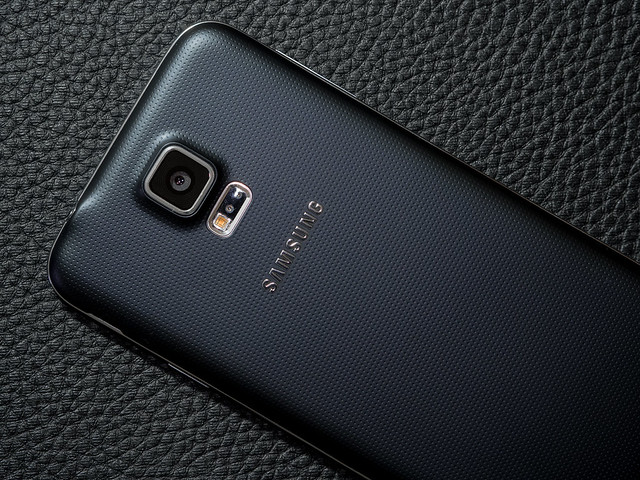
Shot with: Olympus OM-D E-M10 & Olympus 45mm f/1.8

13/05/2016 / / Konica Minolta

Just like Ricoh has done two weeks ago Konica Minolta has now patented a new lens for 1” sensor format, a 9-90mm f/2.8-5.6 zoom with image stabilization. Oddly enough, despite being a stop faster at the wide angle end and offering a 24mm instead of a 28mm full frame equivalent focal length, it has a much simpler lens design – 16 instead of 19 lens elements – than the Nikon 1 Nikkor 10-100mm f/4-5.6 VR zoom lens.

Konica-9-90mm-f-2.8-5.6-1-inch-format

Image source: egami.blog.so-net.ne.jp

13/05/2016 / / Macro
12/05/2016 / / Adapter

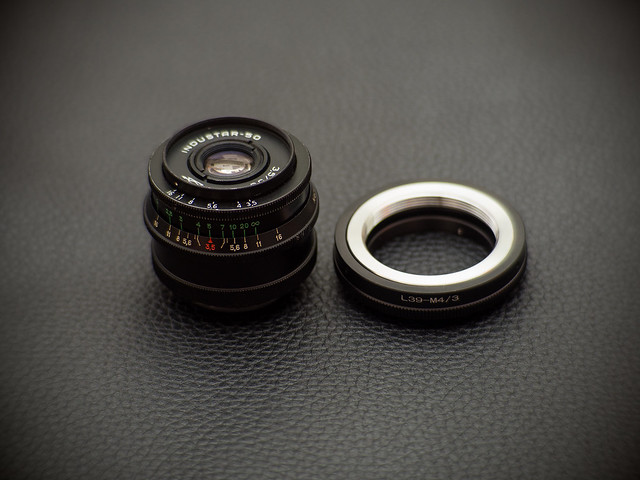
Not long ago while cleaning the house more thoroughly I discovered my father’s old Industar 50mm F3.5. There are many versions of the Industar 50, this one is the version for the M39 mount without the “-2” in its name. And now I have finally bought a M39 to micro 4/3 adapter to test this lens out.

Shot with: Olympus OM-D E-M10 & 50mm f/1.4 CCTV C-mount lens

08/05/2016 / / C-Mount 50mm f/1.4

Do you know that feeling when you fall in love with somebody or something anew? Well, I loved the cheap 50mm f/1.4 CCTV C-mount lens on the Nikon 1 V1 – not so much the ease of use on the N1 camera but the bokeh and its unique rendering. And now using it on the Olympus OM-D E-M10 – with exposure metering, IBIS, focus peaking and magnification – I find that I’m falling in love with it again. 🙂

Shot with: Olympus OM-D E-M10 & 50mm f/1.4 CCTV C-mount lens

07/05/2016 / / Macro
05/05/2016 / / Olympus

Olympus as a whole is a healthy and profitable company, but its imaging division is having a hard time making a profit. You can download the report for the entire fiscal year and 4th quarter at olympus-global.com.

As is to be expected compact cameras are selling worse and worse. Fortunately Olympus is gaining ground on the mirrorless side of things. Responsible for this are OM-D series cameras and the new PEN-F as well as M. Zuiko Digital Pro lenses.

Olympus-financial-report-imagingt

02/05/2016 / / Olympus Deals

Olympus-Europe-Summer-Special-2016

Today Olympus Europe lunched a new summer special bonus program. Promotion period runs between May 2nd and July 31st 2016. You can read all the details at bonus.olympus.eu.

Personally I’m not much of a superzoom or ultra-wide-angle shooter and I already own a nice standard prime lens for micro 4/3 (Pana Leica 25/1.4). No need to upgrade to a new body either, since I’m still more than happy with my OM-D E-M10. I’m, however, interested in the 75‑300mm 1:4.8-6.7 II and 60mm 1:2.8 Macro, but I can’t afford both at present. Fortunately there is more than enough time to make the decision which one to get. 🙂

30/04/2016 / / Ricoh

Egami, a Japanese blog known for releasing patent specifications of lenses designed and made by all notable manufacturer, reports that Ricoh has patented four prime lenses for the 1” sensor format. 25mm f/1.8, 35mm f/1.8, 50mm f/2.4 and 70mm f/2.8. Supposedly these lenses are meant for industrial cameras (so called machine vision applications), which predominantly use C-mount and CS-mount.

Ricoh-70mm-F2.8-1-inch

Ricoh 70mm f/2.8 design – 7 elements in 5 groups

30/04/2016 / / ON1 Photo RAW

ON1-Photo-RAW

Two things are currently making us photographers spend more time in front of our PC monitors than we would like to: stagnating hardware and photo-editing software development and ever higher resolving cameras. The developers at ON1 are looking to change that with ON1 Photo RAW, their latest RAW editing software.

One of the main features of ON1 Photo RAW is its processing engine, which is – according to the developers – supposed to be able to utilize the power of modern day graphics processors in our PCs, in order to speed-up processing and improve user experience. This in my eyes is the most exciting aspect of ON1 Photo RAW – the videos, which you can see down below, certainly look promising. I’m currently using FastStone to separate the wheat from the chaff – Lightroom, in my opinion, is not fast enough for this task – and Lightroom for developing the keepers. Should ON1 Photo RAW deliver on its promise and not have a radically different workflow compared to Lightroom, it could replace both of the said programs.